Contributory Parent Visa 173 is a type of visa under the Parent Visa Australia scheme that is provided by the government of Australia. The Contributory Parent Visa 173 is a temporary pathway for parents of Australian citizens, permanent residents (PR), or eligible New Zealand citizens to live in Australia for two years before getting a PR and shifting to permanent residency. Also known as the Subclass 173, it strives to be a highly effective option within the Parent Visa Australia program provided by the government which is specifically designed to help the parents and the sponsors manage the significant financial commitment by spreading the costs over a longer period.
This Comprehensive Guide focusing on the Contributory Parent Visa 173, helps to identify its benefits, core requirements for the subclass 173, parent visa 173 processing time, and how it transitions smoothly into the permanent Subclass 143 visa. We here at BJay Education & Visa Services provide the latest Department of Home Affairs (DHA) data to help you with expert, accurate, and actionable information, ensuring your application strategy is the best of quality and your application is accepted.
What is the Contributory Parent Visa 173?
Under the Parents Visa Australia Program, the Contributory Parent Visa 173 is also a viable visa option for parents whose children are eligible for the program. In this program, Parents are permitted to reside in Australia for a maximum of two years under the temporary Subclass 173 visa. It is the first step of the bridge in the two-stage option that available for parents who wish to gain the permanent residency (PR) in Australia.
| Feature | Subclass 173 Details |
|---|---|
|
Visa Type |
Temporary (2 years) |
|
Location |
Onshore or Offshore application
(Must be Offshore at the time of grant)
|
|
Processing Priority |
Contributory (faster queue) |
|
Rights |
Work, study, Medicare via bridging |
|
Next Step |
Subclass 143 permanent |
Difference Between Contributory Parent Visa 143 and Contributory Parent Visa 173
The thing that distinguishes between the Contributory Parent Visa 143 and Contributory Parent Visa 173 is in actual duration and scheme of the program being undertaken. Even though the Australian government has provided these two programs under the programs of Parent Visa Australia, there are certain modifications that need to be addressed.
| Feature | Subclass 173 (Temporary) | Subclass 143 (Permanent) |
|---|---|---|
|
Onshore or offshore |
||
|
Initial Status |
||
|
Processing Time |
36-38 months |
36-38 months
in a shared queue
|
|
Total Cost |
$32,525 |
$48,640+ upfront |
|
Bridging Rights |
Yes (work/Medicare) |
No (offshore) |
Contributory Parent Visa 173 Eligibility
The Parent Visa 143 and the Contributory Parent Visa 173 have the same eligibility requirements. Even though the requirements are same you are advised to Fulfill the DHA’s mandatory requirements before submitting an Expression of Interest (EOI) for Contributory Parent Visa 173.
Sponsorship & Settled Status
- Sponsor Requirement: The applicant or sponsored individual must be sponsored by a qualified child who is either an Australian citizen, a permanent resident of Australia, or a qualified citizen of New Zealand.
- Settled Requirement: The applicant sponsor seeking the visa will have to show their “settled” status within Australia. This always requires the sponsor to make sure he or she has been lawfully residing in Australia for a minimum of two years.
“Balance of Family Test” (BOFT)
The Balance of Family Test is a test which verifies the fact that the parent’s main family relationships are located within Australia. The applicant seeking to sponsor the visa has to fulfill one of the following circumstances:
- At least 50% of the applying children are Australian citizens or Australian permanent residents, or eligible New Zealand citizens who are usual residents in Australia.
- More of the candidate’s children live in Australia than in any other nation.
Health & Character
All applicants and accompanying family members are required to meet the Australian requirements regarding health and character:
- Health: The Mandatory Medical examinations will have to be done by an approved physician of the DHA for the verification of the health of the applicant.
- Character: To make an understanding of the character and the circumstances of the applicant, the police clearance certificates must be collected from all the countries in which the applicant has lived for a period of 12 months or more in the past 10 years.
Contributory Parent Visa 173 Cost Breakdown
As per the Data given by the DHA in their respective website, the parent visa 173 cost can be broken down into:
| Cost Component | Primary Applicant | Additional (18+) |
|---|---|---|
|
AUD $1,700 |
||
|
Second VAC Installment |
||
|
AoS Bond (Required for the subclass143 ONLY) |
AUD $10,000 |
AUD $4,000 |
|
Health Exams |
AUD $350-500 |
AUD $350-500 |
|
Police Certificates |
AUD $200-400/country |
AUD $200-400/country |
|
143 Transition |
AUD +$19,420 |
AUD +$19,420 |
|
Total Pathway |
AUD $52,435+ |
AUD $52,435+ |
Contributory Parent Visa 173 Processing Time
The most important information for any applicant applying for any visa program is the processing time. Contrary to shorter estimates sometimes advertised, the Contributory Parent Visa and its streams remain subject to severe capping and queueing.
The DHA divides the process into two key stages:
- Queue Placement: Your application for the program is assessed against core criteria. If successful, you will receive a queue date.
Final Assessment & Grant: After the application has been placed and you receive a queue date ,your application waits in the queue until a visa spot becomes available
Document Checklist for Contributory Parent Visa 173 Application
To ensure your Subclass 173 application moves smoothly through the heavy Department of Home Affairs backlogs, submitting a “decision-ready” file is essential for a successful outcome. By organizing these documents at the lodgment stage, you solidify your eligibility for the Parent Visa Australia program and ensure a clear pathway for the eventual 173 to 143 visa cost transition.
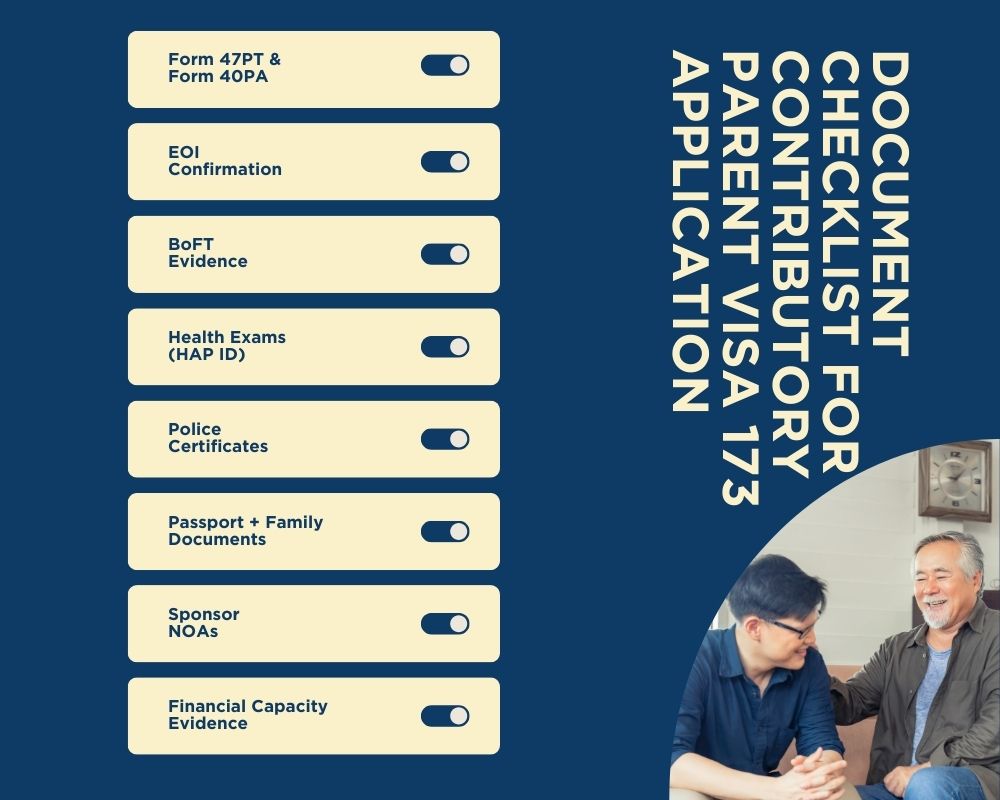
- Form 47PT (173 Application): The primary application form required for parents seeking the temporary contributory parent visa 173.
- Form 40PA (Sponsorship): The mandatory sponsorship undertaking where your Australian child legally commits to supporting your initial stay.
- EOI Confirmation/Invitation: The official notification from the Department of Home Affairs inviting you to lodge your full application.
- BoFT Evidence: Comprehensive birth certificates and residency proofs for all children to satisfy the strict Balance of Family Test requirements.
- Health Exams (HAP ID): Medical results from a DHA-approved physician showing the applicant meets the “No Health Waiver” standards of the program.
- Police Certificates: Character clearances from every country where the parent has resided for 12+ months over the last 10 years.
- Passport + Family Documents: High-quality certified copies of valid passports, marriage certificates, and national ID cards to verify identity.
- Sponsor NOAs (2+ Years Settled): Official Australian Taxation Office (ATO) Notice of Assessments proving the sponsor has been lawfully resident and “settled” for at least two years.
- Financial Capacity Evidence: Bank statements or income evidence proving the sponsor can financially support the parents during their two-year temporary residency.
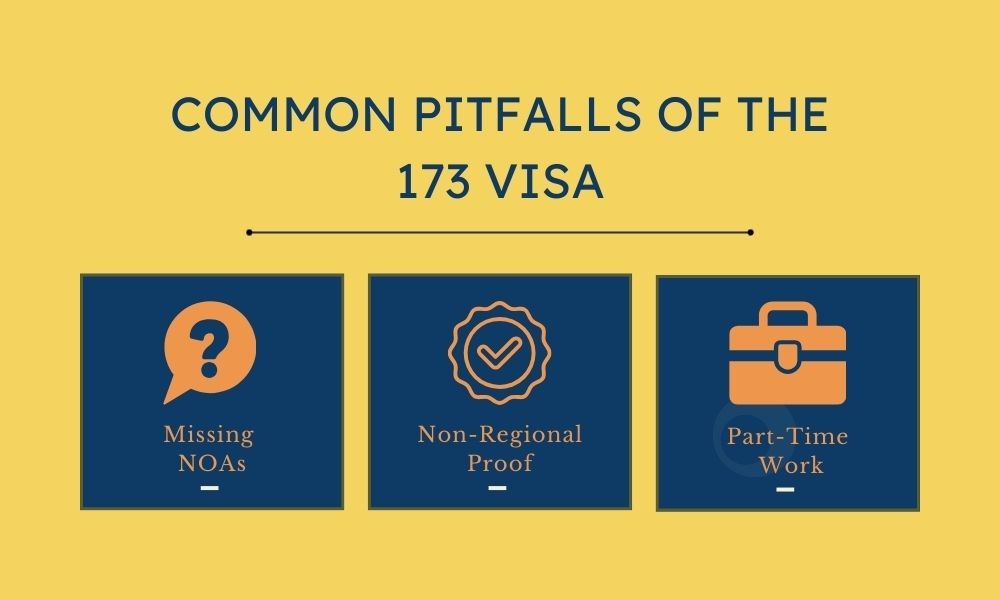
Common Pitfalls and Solution for the Contributory Parent Visa 173
If you are applying for the Contributory Parent Visa 173, it is more than just paperwork that needs to be done there. With the long Waiting list and certain non-refundable fees, slightest of mistakes in the application can lead to your visa getting refused.
The following are the set of common pitfalls that arise in the process of Contributory Parent Visa 173 that needs to be addressed, and we have also provided with the solutions or the ways you can make sure these pitfalls are avoided at any cost.
Pitfall 1: The Offshore Grant Requirement
One of the most common pitfalls in the application process of the Contributory Parent Visa 173 is the location of the parent at the time of the visa grant. While you can lodge the subclass 173 application while the parents are in Australia on a visitor visa, the law generally requires them to be offshore (outside of Australia) when the Department of Home Affairs makes the final decision to grant the visa.
Solution 1: You should monitor your application status very closely and make sure to plan a brief trip to a nearby country, once you have received the pre-grant notification.
Pitfall 2: Health Deterioration (PIC 4005)
Another common pitfall of the Contributory Parent Visa 172 is the Health Deterioration factor because there is no facility health waiver for the parent visa Australia stream, your parents must pass a rigorous medical exam twice; once for the temporary 173 and again for the permanent 143.
Solution 2: You should conduct a comprehensive medical exam with a qualified physician before lodging your application to identify and manage any potential high-cost health risks.
Pitfall 3: Balance of Family Test (BoFT) Miscalculation
Your contributory parent temporary visa subclass 173 requires at least 50% of your parent’s children live in Australia as citizens or PR holders. Families often miscalculate this by failing to count their stepchildren from previous marriages or by including children who are in Australia on temporary student or work visas.
Solution 3: You should perform a family census that includes all biological and stepchildren to verify you meet the 50% ratio before paying the non-refundable fees.
The Pathway from Temporary Contributory Parent Visa 173 to Permanent Contributory Parent Visa 143
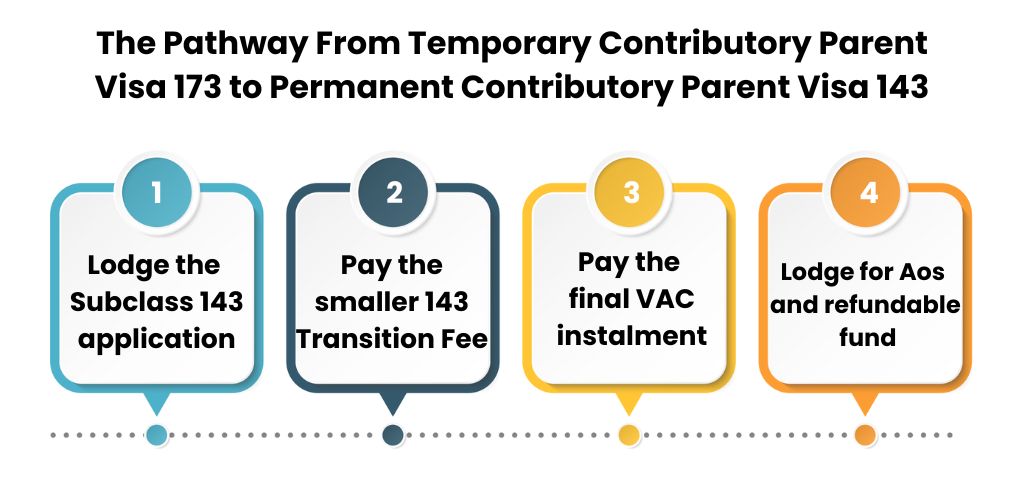
Contributory Parent Visa 173 or the subclass 173 is a temporary visa that is provided to parents of eligible citizens of Australia that has a limited time of 2 years for residence which cannot be renewed or extended. If you want to secure a permanent residency (PR) after subclass 173, you must apply for the permanent Subclass 143 visa within the two-year validity of the 173 visa.
The transition process is straightforward:
- Lodge the Subclass 143 application (Form 47PT).
- Pay the smaller 143 Transition Fee (Application Fee).
- Pay the final, reduced VAC instalment (Approx $19,420$ per adult).
- After all of the Applications have been lodged and the fees have been paid you will then need to lodge the document for the Assurance of Support (AoS) and pay the AoS refundable bond.
Frequently Asked Questions on Contributory Parent Visa 173

The average waiting time for an application of Contributory Parent Visa 173 is around 15 years. This is from the time of application or entering the waiting line until the visa is received because of the government’s capping and waiting line process.
Yes. Once you hold a valid Contributory Parent Visa 173, you can enjoy unrestricted work and study rights for the entire duration of two years of visa validity. In addition, you can also join Medicare, the national health care system of Australia.
The total mandatory Visa Application Charge (VAC) for the full two-step pathway (173 to 143) is approximately AUD approx. $52,435 for a single applicant. Further, you will also have to pay a refundable sum of AUD $10,000$ Assurance of Support (AoS) bond in case you submit an application for the final permanent visa, that is, visa 143.
Yes. The Contributory Parent Visa 173 application may be made in or outside of Australia. However, it is essential that the applicant is outside of Australia when the DHA makes the final decision and grants the visa, unless exemptions pertaining to the temporary COVID-19 circumstances currently in place are met.
It’s an eligibility requirement for the program which ensures that at least one of the applicants has strong family connections in Australia. It’s relevant that should an applicant fail the BoFT in his/her application for Contributory Parent Visa 173 visa should be refused.
If you do not use the apply for the permanent visa subclass 143 visa within the time that your Contributory Parent visa 173 visa is valid and running fine, then you will not have any further visa opportunity that will allow you to remain in Australia and therefore you will need to leave the country.

Get your free Consultation with BJay
Starting your journey in Australia can be hard and overwhelming, when it comes to knowing the requirements of the skill assessment, visa eligibility and the documents required for the process. That’s why we BJay Education & Migration offer you a completely free, no-obligation consultation service so you can get all the support you need and boost the chances of studying or working in Australia.
Take the Free Consultation Today: Book your free consultation with BJay and let us guide you through every hurdle that comes in the path of you and a positive skill assessment in Australia.
Related :804 Visa, Parent Visa 103