Remaining Relative Visa is often regarded as the last visa hope that is used by families who are separated due to international borders. This visa program allows eligible family members to join their immediate family in Australia as a Permanent Residency (PR) holder in Australia. In case that you are the last person in your family who is currently living outside of Australia then this visa program provided by the Australian government helps you to settle in the turf of Australia with a PR and join your family who have successfully settled in Australia as Citizens or PR holders.
With more than 13 years of experience in related field, BJay Education & Visa Services seeks to provide you with everything you need to know about the Remaining Relative Visa. To help you with it, we have meticulously drafted this guide with the data against the Department of Home Affairs (DHA) data. In this guide you will get to know about the Remaining Relative Visa, its costs, processing times and detailed step-by-step process.
Remaining Relative Visa
The Remaining Relative Visa is one of the visa program under the various visa programs provided by the Australian government that is a PR visa that is specifically designed for you if you have your near relatives settled in Australia. To be eligible as a “remaining relative” and apply for this visa program, you and your partner (if applicable) are required to be the only family member who is outside the turf of Australia. This visa program falls under the “Other Family” and have annual caps, creating gaps
The Remaining Relative Visa has been divided into 2 distinct subclasses that have been split based on your location at the time of lodgment of your application:
Subclass 115: This visa subclass under the remaining relative visa is used by the applicants who are applying for the visa while they are outside the turf of Australia.
Subclass 835: This visa subclass under the remaining relative visa is used by the applicants who are already in the turf of Australia on a valid visa and are applying for this visa.
Subclass 115 vs Subclass 835
If you are considering applying for a Remaining Relative Visa in 2026 then you need to know about both the subclasses that are provided by the visa program. Choosing from the two subclasses entirely depends on your physical location at the time of your application. While both are similar to each other there are some dinstinct features that differentiate from one another.
| Feature | Subclass 115 (Offshore) | Subclass 835 (Onshore) |
|---|---|---|
| Location at Lodgement | Must be outside Australia. | Must be inside Australia. |
| Location at Grant | Must be outside Australia. | Must be inside Australia. |
| Bridging Visa | None. You have no right to enter or stay in Australia while you are waiting for the visa grant. | Granted. A Bridging Visa (usually BVA ) allows you to stay in Australia lawfully until the visa has been granted. |
| Medicare Access | Only available after the visa is granted and you have arrived in Australia. | Usually eligible for Medicare access while on a Bridging Visa (after lodgment). |
| Work/Study Rights | Only available after visa grant and arrival. | Dependent on the conditions of your Bridging Visa (usually inherits previous visa rights). |
| Estimated Wait Time | Approximately 22–24 years (Capped & Queued). | Approximately 22–24 years (Capped & Queued). |
| Base Application Fee | AUD $5,280 (First Installment) | AUD $5,280 (First Installment) |
| Second Installment | AUD $2,065 (Payable before grant) | AUD $2,065 (Payable before grant) |
| Lodgment Method | Digital (via ImmiAccount) or Paper. | Digital (via ImmiAccount) or Paper. |
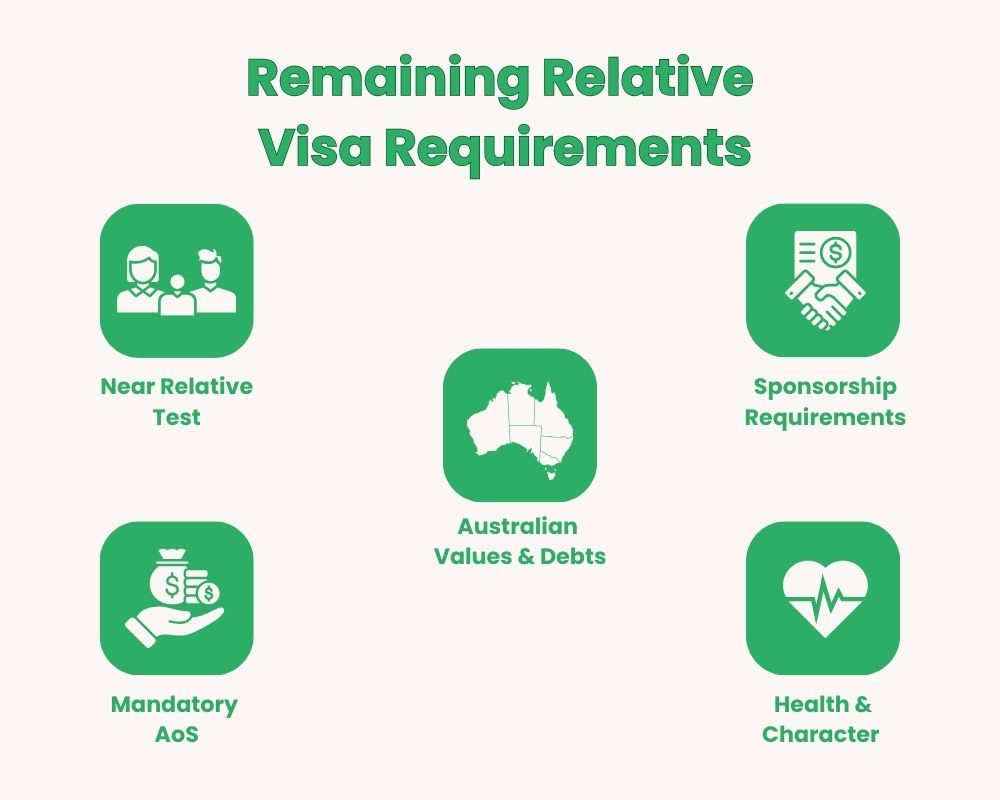
Remaining Relative Visa Requirements
If you want to qualify for a Remaining Relative Visa in 2026, be it the subclass 115 or the Subclass 835, you need to navigate through one of the strictest eligible criteria in the migration system of Australia. As the DHA employs a “Zero Tolerance” approach to these requirements, you need to satisfy these requirements to be eligible for the visa grant.
The Near Relative Test
This is regarded as the most critical requirement that is to be fulfilled under the Remaining Relative Visa. In this requirement, you and your partner (if applicable) are required to provide evidence that you have no near relatives living outside the turf of Australia. In the near relative criteria, it may include the following relations:
- Parents
- Siblings
- Non-dependent children
- Children under the age of 18
Sponsorship Requirements
For the Remaining Relative visa, the sponsors who are sponsoring you also are required to fulfill the sponsorship requirements criteria. In this requirement, they are required to be sponsored by an eligible relative (or their partner) who satisfies the following requirements:
- The sponsor is required to be 18 years old or above.
- The sponsor is required to be settled in Australia and have to had lived as a citizen or a PR holder for at least 2 years.
- The sponsor is required to be an Australian citizen, Permanent Resident of Australia, or an eligible New Zealand Citizen.
- The sponsor is required to have a clean record and history. They are not suppose to have sponsored another person for a Remaining Relative or Preferential Family visa previously.
Mandatory Assurance of Support
As the remaining relative visa program is a PR visa, the government of Australia requires you to provide a financial guarantee to make sure that you don’t reply solely on the social welfare system provided. In this requirement, you are required to provide a legal contract between the sponsor and Services Australia (Centrelink). For this visa, you are required to submit the mandatory financial bond which is currently AUD $7,500 for the primary applicant and AUD $3000 for each adult secondary applicant. This bond is a security that is held for the duration of 2 years after you have arrived in the turf of Australia.
Health and Character Requirements
- Medical Exams: For you to be an eligible candidate, you are required to be able to meet the Migration Health Requirements set by the DHA to ensure that you are not a threat to the Australian community.
- Police Clearance: For this requirement to be satisfied, you are required to provide original police clearance certificates for every country where you have lived for 12 months or more over the last 10 years since you turned 16.
Australian Values and Debts
- If you are an applicant who is applying for the Remaining Relative Visa in 2026, you are required to be above the age of 18 and are required to sign the Australian Values Statement which confirms that they respect the Australia way of life and obey the laws with it.
- You are required to have no outstanding debts to the government of Australia or have an approved arrangement to pay it back before the visa can be granted to you.
Remaining Relative Visa Cost
As planning for anything requires you to always plan financially. The cost related to Remaining Relative Visa is divided into 2 different installments that helps to manage the financial commitment of Permanent Residency. The following table shows you the cost related to this visa program:
| Expense Category | Primary Applicant | Additional Adult (18+) | Dependent Child (<18) |
|---|---|---|---|
| Visa Installment 1 (At Lodgement) | AUD $5,280 | AUD $2,640 | AUD $1,325 |
| Visa Installment 2 (Before Grant) | AUD $2,065 | AUD $2,065 | AUD $0 |
| AoS Bond (Refundable after 2 years) | AUD $7,500 | AUD $3,000 | AUD $0 |
| Total Government & Bond Cost | AUD $14,845 | AUD $7,705 | AUD $1,325 |
Remaining Relative Visa Processing Time
With high demand and strict visa program under various family streams, this visa program has capped and queued visa programs. The Remaining Relative Visa is subject to a strict cap which is set by the government of Australia. As of March,2026, this pathway is still among the longest visa processing time.
| Visa Subclass | Initial Assessment Period | Queue Date Being Processed | Total Estimated Wait (New Applicants) |
|---|---|---|---|
| Subclass 835 (Onshore) | 4–6 Weeks | Up to 31 May 2013 | Approximately 22 Years |
| Subclass 115 (Offshore) | 4–6 Weeks | Up to 31 May 2013 | Approximately 22 Years |
Remaining Relative Visa Application Process
As the Remaining Relative Visa is one of the strictest visa programs under the various visa programs in Australia it does through a rigorous, multi-stage journey that requires precise documents. Unlike other visa programs that in 2026 that follow digital lodgment process, the Remaining Relative Visa still follows a hybrid lodgment process involving paper submission which is followed by digital tracking.
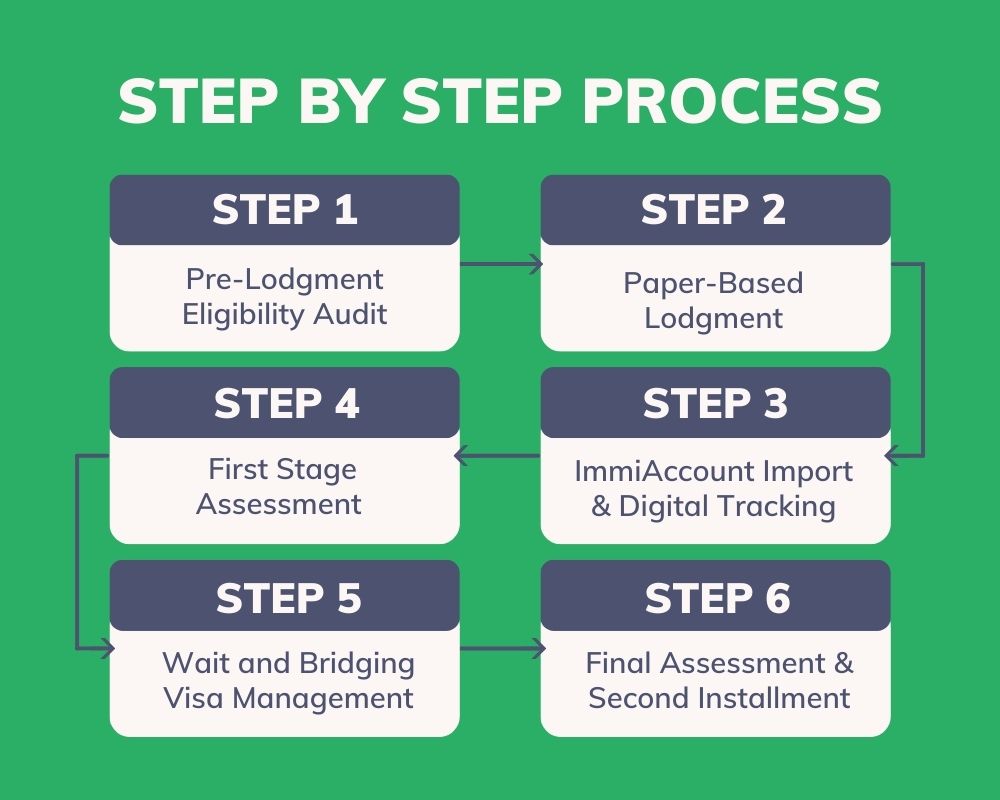
Step 1: Pre-Lodgment Eligibility Audit
Before you even start to think about applying for the Remaining Relative visa program and spending a huge amount of money on application fees, you should conduct a thorough check on the stringent “Near Relative” Requirement. In this step, you are required to gather identity documents like birth certificates, family books, and death certificates for all the siblings and parent in the family that is used to provide that you have no near relative who is living outside of Australia.
Step 2: Paper-Based Lodgment
Unlike other visa programs that have shifted from the paper-based application to digital application, the Remaining Relative Visa program is still based on paper applications despite the digital age. The application for this visa program is processed by the Parent, Child and Other Family Processing Centre in Perth.
In this visa application, you are required to complete the Form 470F which is the application for migration to Australia by other family members. After you have completed the form, you are required to send it via post or courier, and the DHA recommends you use tracked registered mail to ensure the application is sent. Then you are required to pay the first installment of Visa Application Charge (VAC) at the time of mailing.
Step 3: ImmiAccount Import & Digital Tracking
Although the Application lodgment includes paper application, you are able to import the application to your ImmiAccount which then allows you to track the progress of the application digitally and are receive notifications from the concerned department in real time. Then after this you receive a request from the Department to provide the required biometrics (fingerprints and photo) at an Australian Visa Application Center (AVAC).
Step 4: First Stage Assessment (The Queue)
After all the above steps have been completed, the next step in Remaining Relative Visa process is where a case officer will conduct a core criteria check where you can have 2 outcomes:
- Outcome 1: Queued
You get a written Queue Date if you pass the near-relative test and fulfill the health and character standards.
- Outcome 2: Refusal
Your application is rejected here, and you are not added to the queue if you don’t meet any of the fundamental requirements.
Step 5: The Wait and Bridging Visa Management
Subclass 835: As subclass 835 is an onshore application and requires you to have a valid visa before applying for this visa, you are eligible to apply for a Bridging Visa. While you are waiting for the visa grant, you will have a Bridging Visa A and if in case you need to travel you need a Bridging Visa B (BVB).
Subclass 115: The subclass 115 is an offshore application and under this program you need to wait outside of Australia until your visa application has been granted.
Step 6: Final Assessment & Second Installment
When your Queue date for your Remaining Relative Visa application has finally reached after the estimated 22 years of wait you will be required to update the health and character clearances. Then you are required to finalize the Aos Bond with the Services Australia and pay the final fee of AUD $ 2,065 visa fee.e Remaining Relative Visa
Remaining Relative Visa Document Checklist
If you want to secure your place in the strict Remaining Relative Visa queue in 2026, you need to compile a proper list of documents and provide indisputable evidence supporting your claims. The DHA follows a strict evidence policy for this visa program and if you aren’t able to provide sufficient proof, your application may be rejected before it even reaches the queue.
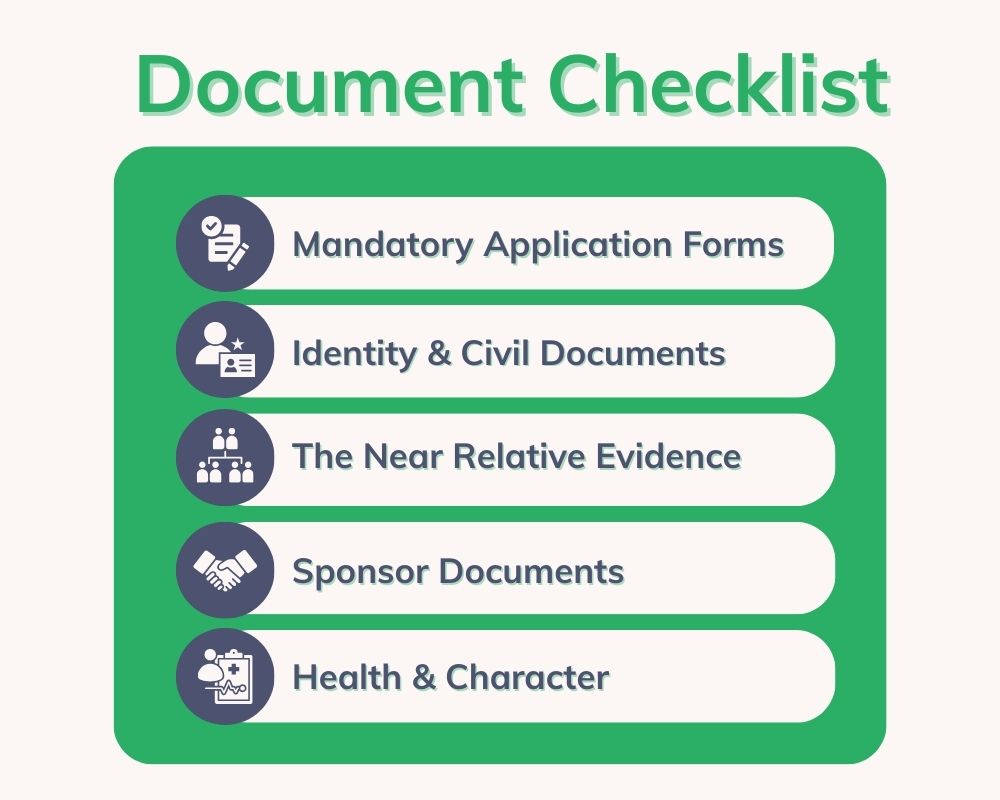
Mandatory Application Forms
- You are required to submit the Form 470F which is the application that is used for migration to Australia by other family members.
- You are required to submit Form 40 which is the application used for sponsorship for migration to Australia which needs to be completed and signed by the sponsor.
- You are required to submit Form 80 which is used for the purposes of personal particulars for character assessment which is required for all applicants who are above the age of 16.
- You are required to submit Form 1221 which is used to define any additional personal particulars (Required for all applicants aged 18+).
- You are required to submit Form 956/ Form 956A if you decide to appoint a Migration Agent like BJay or an Authorized Recipient.
Identity & Civil Documents
- You need to provide high-quality color scans of your current and valid passport.
- You need to provide birth certificate showing the names of both of your parents.
- You need to provide two recently taken passport-sized photos of dimensions 45 mm x 35mm with names written on the back of the photo.
- You need to provide identity cards that are issued by the government from your home country.
The Near Relative Evidence
- You need to provide a detailed diagram showing all the family members including all siblings, parents, and non-dependent children.
- You need to provide relationship proof to show your relationship linkage.
- You need to provide proof that your only near relatives are in Australia (e.g., copies of their Australian passports or PR visas).
- You need to provide death certificates of your descended relative.
Sponsor Documents
- You need to provide a certified copy of the sponsor’s Australian passport, Citizenship Certificate, or Permanent Resident Visa to show the sponsor’s status in Australia.
- You need to provide documents proving your sponsor has lived in the turf of Australia for the last 2 years and can provide documents like utility bill, tax bills etc.
Health & Character
- You are required to provide police certificates from every country that you have lived in for 12 months or more in the last 10 years.
- You need to provide Medical Examinations. But make sure that you only complete it after you have received a request from the DHA.
FAQs
You and your partner (if applicable) must not have any other close relatives (parents, siblings, or non-dependent children) residing outside of Australia in order to qualify as a remaining relative. A relative’s presence outside of Australia will usually disqualify you, even if you haven’t spoken to them in years.
Yes. You can work and study while you are waiting for your subclass 835 visa if you have a Bridging Visa. If you apply with a substantive visa, you are usually granted a Bridging Visa A (BVA) and inherit the conditions from your previous visa program.
Yes. Both Subclass 115 and Subclass 835 are still open despite reports of their closure. But as of March 6, 2026, the Assurance of Support (AoS) and the validity of the “Near Relative” proof submitted at lodgment are subject to more stringent “front-end” inspection from the Department of Home Affairs (DHA).
If you have applied for the Subclass 835 while being in the turf of Australia, you are typically granted a Bridging Visa A and are generally eligible to enroll in Medicare services from the date of your Application lodgment but offshore applicant (Subclass 115) don’t have access to Medicare benefits until the grant and wait outside of Australia.
As the Remaining Relative Visa is one of the strictest visa programs under the various visa programs provided by the Australian government, you are required to have a precise application that is on point from the first day. with huge processing timelines that exceeds decades, even a minor mistake can lead to refusals and cost you your place in the queue.
Why BJay?
Proven Expertise: With 13 years of experience in Visa services in Australia, we here at BJay Education & Visa Services have been providing tailored services to help you navigate through the complex migration scenes of Australia.
Expertise Team: Led by Mr. Jay Oli (MARN: 1570827), we have an exceptional team that is there to solve any queries and help you with your application. The team is well trained to provide the services that you may require assistance with.
Global Presence & Local Support: With offices present in multiple locations throughout Nepal (Putalisadak and Birtamode) and a head office in Sydney, BJay provides you with seamless support you may require whether you are in your home country or already in the turf of Australia.
Bridging Visa Management: With expertise in Visa applications, we provide you the help you require with your Bridging Status throughout the long-term processing period of the Remaining Relative Visa in Australia.
Ready to join your loved ones in Australia with Remaining Relative Visa? Join BJay and let’s build your pathway together.